
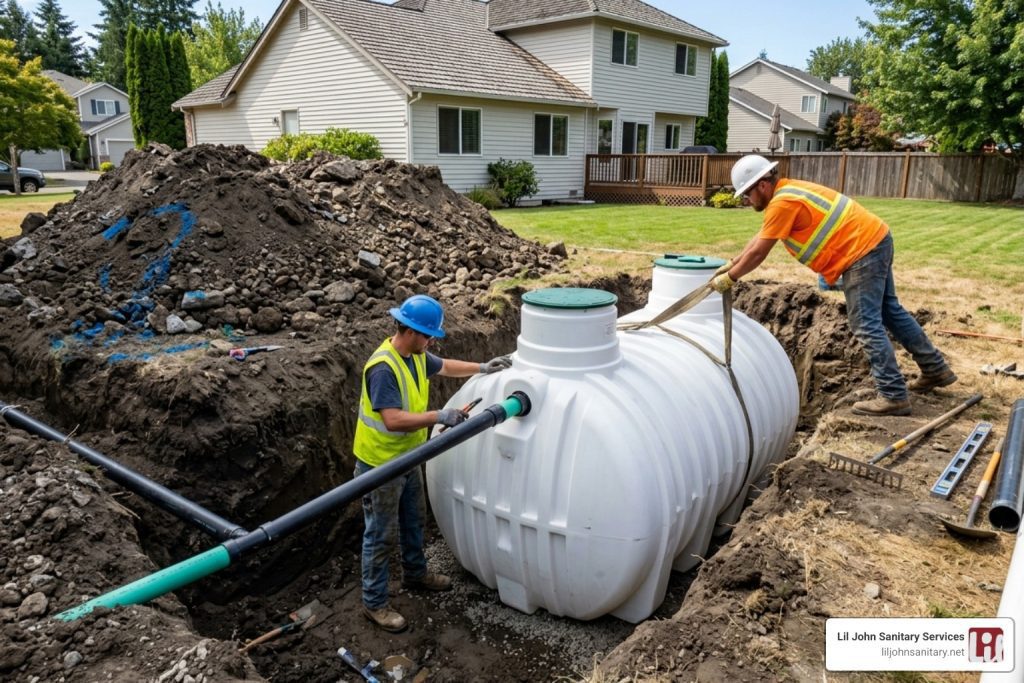
Holding tank septic systems are watertight underground or above-ground tanks that store all household wastewater until a pump truck removes it. Unlike a traditional septic system, there is no drain field, no soil treatment, and no outlet pipe — waste goes in and stays there until it’s hauled away.
Quick answer for buyers comparing waste holding solutions:
| Feature | Holding Tank | Traditional Septic System |
| How it works | Stores waste only | Treats and disperses waste |
| Installation cost | $6,500 – $8,000 | $14,000 – $30,000 |
| Pumping frequency | Every 1 – 4 weeks | Every 3 – 5 years |
| Annual maintenance cost | ~$6,720 | ~$125 |
| Best for | Temporary, seasonal, or difficult sites | Full-time residential use |
| Drain field required | No | Yes |
If your property has a high water table, poor soil drainage, or limited space, a holding tank may be your only viable option. They are also common on construction sites, at remote cabins, and in environmentally sensitive areas where a drain field cannot be permitted.
But here’s the thing most sellers won’t tell you upfront: a holding tank is almost always the more expensive choice in the long run. The low installation price can mask annual pumping costs that dwarf what you’d spend on a conventional system.
This guide breaks down everything you need to make a smart decision — from tank types and installation costs to regulations in Whatcom and Skagit County and what ongoing maintenance actually looks like in practice.