
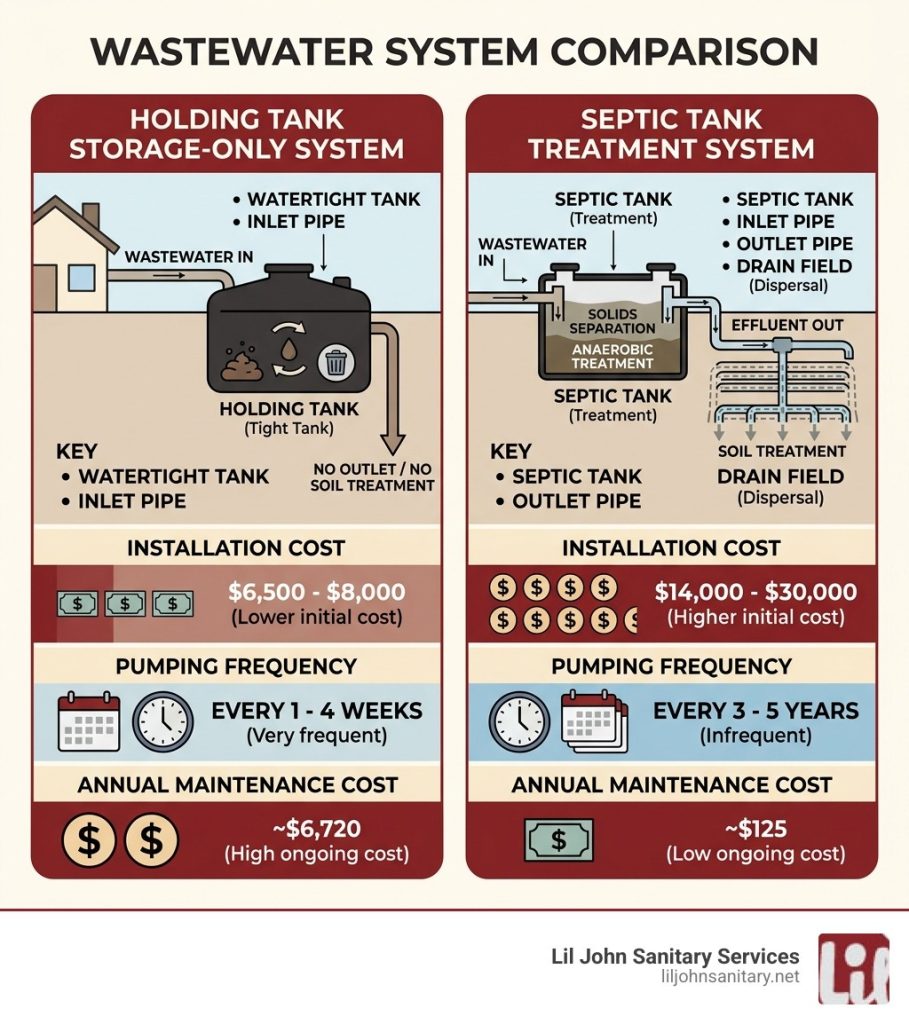
When we talk about holding tank septic systems, the most important thing to grasp is that they are “tight tanks.” This means they are designed to be completely sealed. In a traditional septic setup, the tank is just the first stop; it separates solids from liquids, and the liquid (effluent) flows out into a drain field where the soil naturally treats it.
With a holding tank, there is no “out.” Every gallon of water you flush, every minute the shower runs, and every load of laundry adds to the volume inside that watertight vault. There is no anaerobic decomposition or soil dispersal happening on your property. You are essentially renting or buying a giant bucket that we have to come and empty for you.
To help you visualize the difference, take a look at this comparison:
| Feature | Holding Tank | Traditional Septic System |
| Primary Function | Total Storage | Treatment & Dispersal |
| Outlet Pipe | None | Leads to Drain Field |
| Biological Activity | Minimal | Significant (Anaerobic) |
| Soil Requirement | None (No Perc Test needed) | High (Requires Drain Field) |
| Environmental Risk | High if Overfilled | Low if Maintained |
For a deeper dive into these mechanics, check out Septic Tank vs Holding Tank: Key Differences and Costs or read our internal guide on More info about the differences between tanks.
Key Features of Holding Tank Septic Systems
Modern holding tank septic systems are a far cry from the old concrete pits of the past. Most today are made from high-density polyethylene (plastic) or fiberglass. These materials are favored because they are lightweight, corrosion-resistant, and watertight.
Polyethylene tanks are especially popular in areas like Bellingham and Mount Vernon because they won’t rust or degrade when buried in our damp Northwest soils. They typically range in capacity from 1,000 to 4,000 gallons for residential use, though specialized commercial models can reach 10,000 gallons. Key features often include UV-stabilized plastic for above-ground use and molded-in fittings that prevent leaks at the pipe connections.
Above-Ground vs. Below-Ground Waste Solutions
While most people think of septic tanks as being buried, above-ground options are a lifesaver for certain sites. These are often used for temporary installations or on properties with extremely high water tables where digging a deep hole is impossible.
Above-ground waste holding tanks are designed with a very low profile—usually between 16 and 25 inches in height—allowing them to slide under construction trailers or temporary cabins. However, for permanent residences in Skagit or Whatcom County, below-ground tanks are the standard. Below-ground installation requires careful excavation to ensure the tank is level and properly supported so it doesn’t crack or “float” out of the ground when it’s empty during a rainy season.
Installation Requirements and Financial Implications
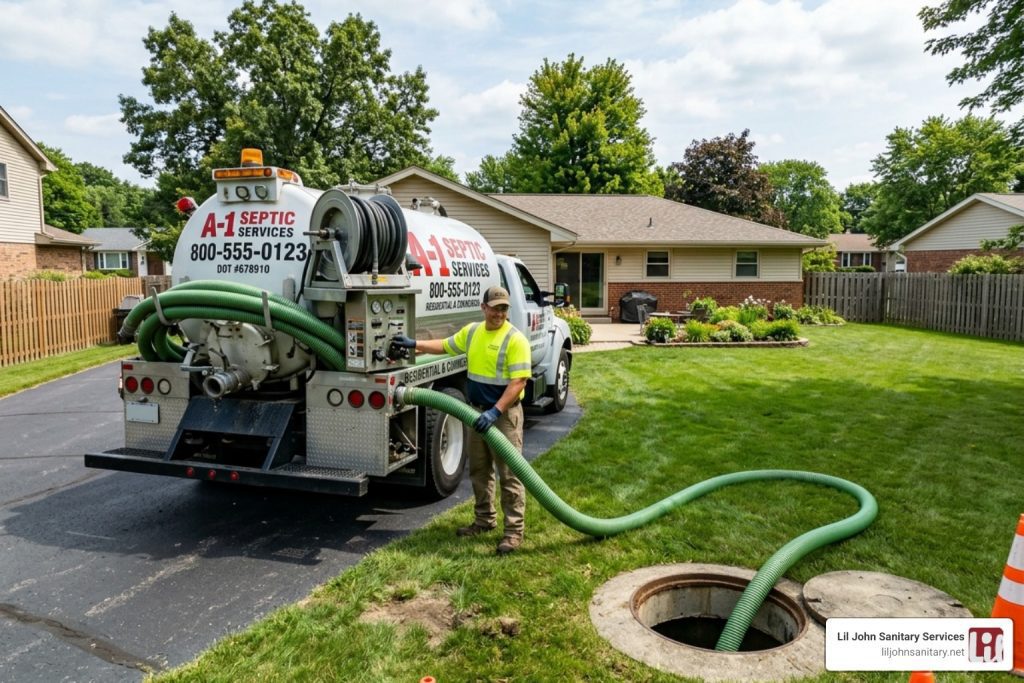
Installing a holding tank is generally faster and cheaper than a full septic system because you don’t have to build a drain field. You don’t have to worry about soil percolation (how fast water drains through your dirt), which is usually the biggest hurdle for property owners.
As of May 2026, the estimated project cost to install a 2,000-gallon polyethylene holding tank for a family of four is between $6,500 and $8,000. Compare that to a full septic system and drain field, which can easily run between $14,000 and $30,000. It sounds like a bargain until you look at the 10-year cost of ownership. For more on the technical side, you can review this Scientific research on holding tank and hauling systems.
Long-Term Maintenance Costs
This is where the “Don’t Let Your Money Go Down the Drain” part of our title comes in. Because a holding tank doesn’t treat any water, you have to pay for every single gallon to be hauled away.
For a family of four, the average annual cost to maintain a 2,000-gallon holding tank with monthly service is approximately $6,720. In contrast, a standard septic tank only needs pumping every 3 to 5 years, costing about $125 per year when you break it down.
Pumping rates are often based on volume. You might pay 40 cents per gallon for a small 500-gallon tank, while larger 2,000-gallon tanks might be closer to 28 cents per gallon. In some jurisdictions, you may even be required to post a financial bond to ensure you can afford the ongoing pumping, as an abandoned holding tank is a major environmental hazard.
Maintenance, Pumping, and Essential Safety Features
Maintenance for holding tank septic systems is simple but strict. If you forget to pump a traditional septic tank, you might eventually clog your drain field. If you forget to pump a holding tank, the sewage has nowhere to go but back up into your house.
Pumping frequency is the biggest adjustment for new owners. Depending on your water usage, you may need a pump-out every 1 to 4 weeks. We always recommend our customers in Lynden and Ferndale keep a close eye on their sludge and liquid accumulation.
For more help understanding the maintenance schedule, see More info about septic and holding tank differences.
Best Practices for Maintaining Holding Tank Septic Systems
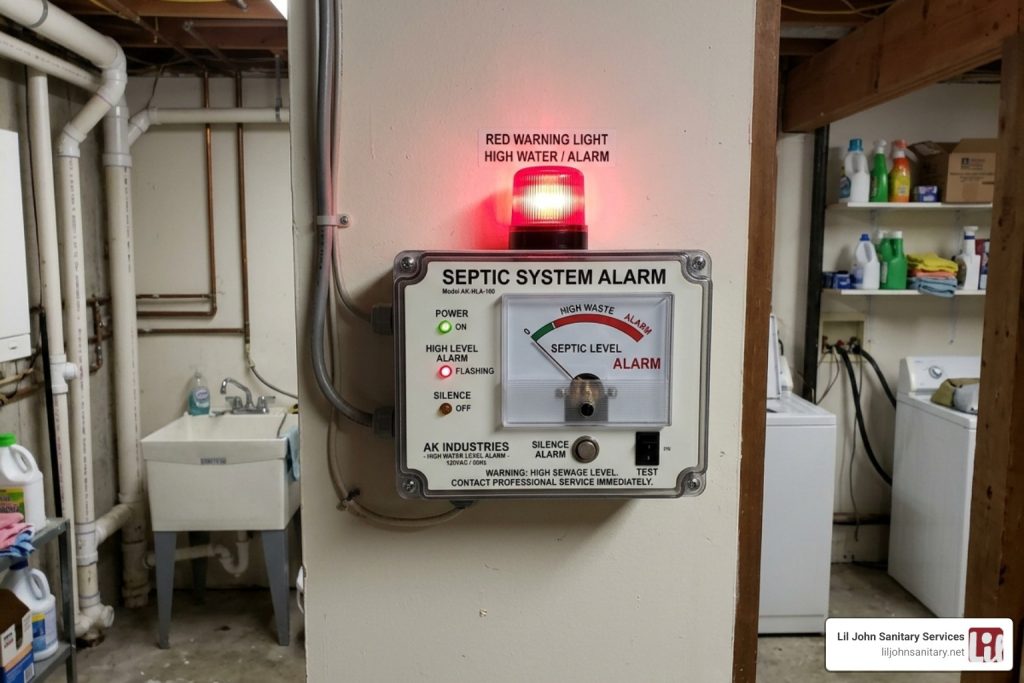
To prevent messy backups, every holding tank must have a high-level alarm. These systems use a float inside the tank that triggers an audible horn and a visual red light when the tank reaches 75% capacity.
Our Top Maintenance Tips:
- Check the Alarm: Test your alarm monthly to ensure the battery or electrical connection is solid.
- Water Conservation: This is your best friend. Install low-flow toilets and showerheads. Every gallon you save is money in your pocket.
- Clean the Floats: Occasionally, “scum” can build up on the alarm float, causing it to stick. Professional cleaning ensures it triggers when it should.
- Leak Detection: If you notice your tank is filling up much faster than usual, you might have a leaky toilet or faucet. Fix it immediately!
Winterization and Environmental Safety
In the colder parts of Whatcom County, like Deming or Everson, freezing is a real concern. Because holding tanks contain a high volume of liquid and lack the natural heat generated by the biological activity in a septic system, they can freeze more easily.
We recommend using insulation blankets or a layer of straw/leaves over the tank during the winter months. Additionally, buoyancy is a factor—if the groundwater rises during a heavy Skagit County rainstorm and your tank is empty, it can actually pop out of the ground like a cork. Professional installers use anchors or “side wings” to prevent this. Finally, never enter a tank; the gases inside are toxic and can be lethal in seconds. Always use a licensed hauler contract for service.
Regulations and Real-World Applications
In Washington State, holding tanks are generally considered a “last resort.” The Department of Health (DOH) has strict standards for their use. They are usually only permitted for permanent residential use if a standard system has failed and there is absolutely no other way to fix it.
Local health jurisdictions, like those in Whatcom and Skagit Counties, have specific setback requirements. For example, a holding tank must typically be at least 50 feet away from any private well and 100 feet away from a public water source. For the full legal breakdown, you can view the Regulatory guidance on holding tank sewage systems.
Common Use Cases for Holding Tanks
Despite the costs, there are several scenarios where a holding tank septic system is the perfect tool for the job:
- Remote Cabins: Perfect for seasonal use where the volume of waste is low.
- Construction Sites: Above-ground tanks provide sanitary solutions for workers.
- Marinas and RV Parks: Ideal for centralizing waste from many small sources.
- Failing System Repairs: When a lot is too small for a new drain field.
- Sensitive Estuarine Areas: Near Samish Bay or other water bodies where nitrogen runoff from a drain field would be harmful.
Frequently Asked Questions about Holding Tanks
How often does a holding tank need to be pumped compared to a septic tank?
A holding tank usually needs pumping every 1 to 4 weeks for a full-time residence. A standard septic tank only needs it every 3 to 5 years. The difference is that a holding tank has no way to get rid of liquid, while a septic system sends 99% of the liquid into the ground.
Can I convert my holding tank into a traditional septic system later?
Possibly! If a municipal sewer line is extended to your area, or if you purchase additional land that passes a soil “perc” test, you can often repurpose the holding tank as a septic tank by adding an outlet pipe and a drain field, provided the tank meets local size and baffle requirements.
What are the legal requirements for installing a holding tank in Washington State?
You must obtain a permit from your Local Health Jurisdiction (Whatcom or Skagit County Health Departments). They will usually require a site plan, a watertightness test after installation, and a signed service contract with a licensed pumper like us.
Conclusion
Choosing between a holding tank and a traditional septic system is a big decision that impacts your wallet for years to come. While holding tank septic systems offer a lower entry price and a solution for “unbuildable” lots, the long-term service fees require careful planning.
At Lil John Sanitary Services, we’ve spent 60 years helping our neighbors in Bellingham, Burlington, and throughout Whatcom and Skagit Counties navigate these choices. As a family-owned, licensed, bonded, and insured team, we’re here to ensure your system—whatever type it is—runs smoothly. Whether you need a regular pump-out, an emergency inspection, or advice on a new installation, we’ve got you covered.
Don’t let your money go down the drain. If you’re still unsure which system is right for your property, check out our guide on Septic Tank And Holding Tank Whats The Difference/ or give us a call today!