
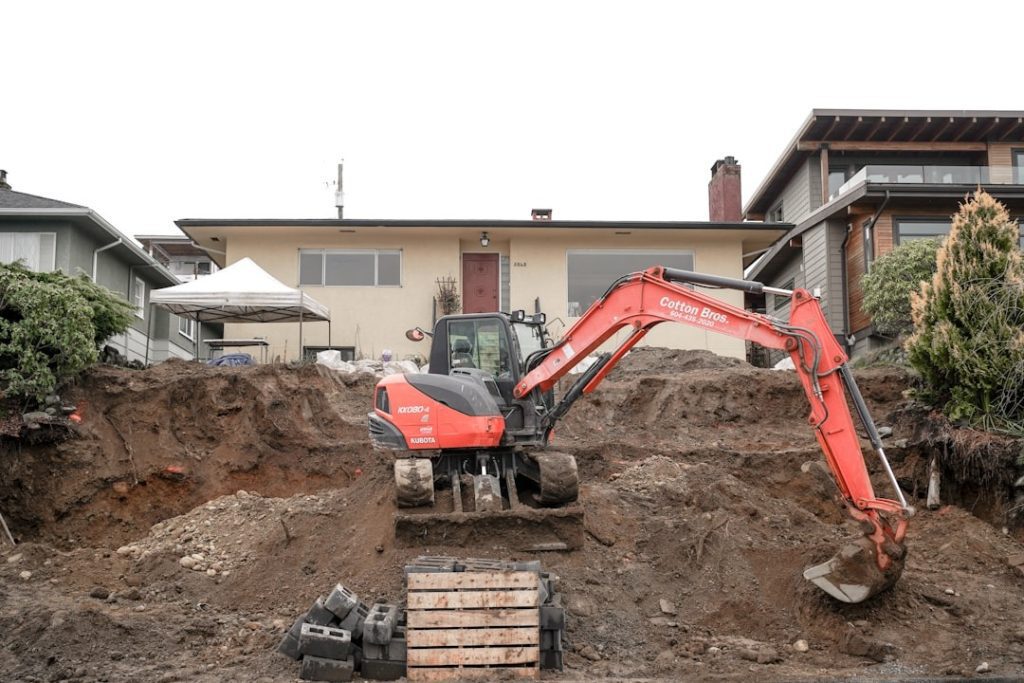
How long does a septic system last depends heavily on the materials used, how well it’s maintained, and the conditions it operates in — but here’s a quick breakdown:
| Component | Typical Lifespan |
| Concrete septic tank | 40+ years |
| Plastic septic tank | 30-40 years |
| Fiberglass septic tank | 25-40 years |
| Steel septic tank | 15-20 years |
| Drainfield (leach field) | 20-30 years (up to 50+ with excellent care) |
| Effluent pump | 7-15 years |
| Aerator motor | 3-5 years |
The short answer: Most septic systems last between 15 and 40 years. The average is around 20-30 years. But a well-maintained system can push 50 years or more.
The difference between a system that fails at year 12 and one that’s still running at year 50? Almost entirely maintenance, material, and daily habits.
For homeowners in rural Whatcom and Skagit Counties, this matters a lot. Your septic system is one of the most expensive components of your home — and one of the most ignored. Replacement can cost anywhere from $10,000 to $30,000 or more. The pumping appointment you keep skipping? That’s the thing standing between you and that bill.
The tank is only part of the story. The drainfield is usually the first thing to fail — and it’s the most expensive to fix.
This guide breaks down exactly what determines your system’s lifespan, what warning signs to watch for, and what you can do right now to get more years out of what you have.
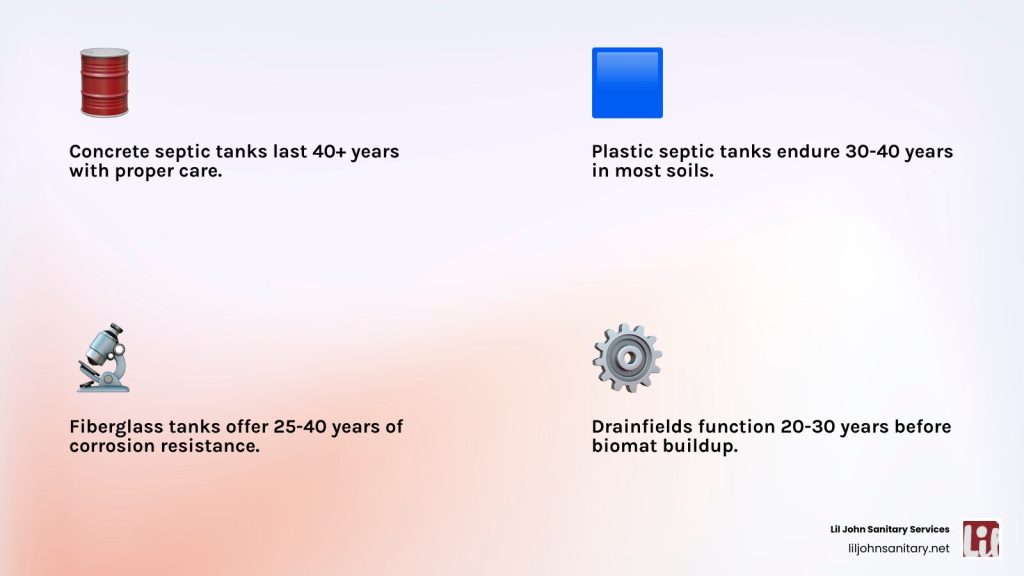
Average Lifespan by Component and Material
When we talk about how long does a septic system last, we have to look at the “bones” of the system: the tank. Not all tanks are created equal. In our 60 years of serving the Pacific Northwest, we’ve seen everything from ancient concrete vaults to rusted-out steel cans from the 1970s.
Concrete Durability: The 40-Year Benchmark
Concrete is the heavyweight champion of septic materials. Most modern systems in places like Bellingham and Mount Vernon utilize precast concrete. These tanks are incredibly sturdy and, under normal conditions, will easily last 40 to 50 years. They are heavy enough to resist “floating” in high water tables (a common issue during our rainy Skagit winters) and can withstand significant soil pressure. However, they aren’t invincible. Over decades, the gases inside the tank can actually corrode the concrete above the waterline, which is why regular inspections are vital.
Plastic and Fiberglass Longevity
Plastic (High-Density Polyethylene) and fiberglass tanks are becoming more popular, especially in hard-to-reach installation sites. These materials are naturally resistant to the chemical corrosion that can plague concrete. A quality plastic tank can last 30 to 40 years. The main risk here isn’t rot; it’s structural. If not installed perfectly, or if the soil shifts significantly, these lighter tanks can crack or even “pop” out of the ground if they are pumped dry during a high-water event.
Steel Tank Risks: The 15-20 Year Failure Rate
If you are buying an older home in Sedro Woolley or Anacortes and find a steel tank, be prepared for a replacement. Steel tanks are essentially obsolete. They typically last only 15 to 20 years before the bottom or the baffles rust out. Even worse, a rusted steel lid is a massive safety hazard; they have been known to collapse under the weight of a person or a lawnmower. For more details on material differences, check out this guide on how long does a septic system last? What you need to know.
The Lifespan of a Septic Drainfield
The tank is just a settling basin; the drainfield (or leach field) is where the real work happens. This is a series of perforated pipes buried in gravel trenches. Its job is to slowly release effluent into the soil.
A functional life of 20 to 30 years is standard for a drainfield. The primary “killer” of a drainfield is biomat accumulation. This is a layer of bacteria and organic slime that naturally forms in the soil. If you don’t pump your tank, solids flow into the drainfield, feeding this biomat until it becomes so thick that water can no longer soak into the ground. Once the soil is “clogged,” the system is effectively dead. You can find more info on system longevity regarding these biological processes.
Mechanical Components and Pumps
Modern systems often include more than just gravity and a tank. If your property has an incline, you likely have an effluent pump. These mechanical hearts typically last 7 to 15 years. Aerator motors, found in Aerobic Treatment Units (ATUs), work much harder and usually need replacement every 3 to 5 years. Other small but critical parts include:
- Distribution Boxes: These level out the flow to different lines in your drainfield.
- Float Switches: These tell your pump when to kick on.
- Baffles: These prevent solids from leaving the tank and entering the drainfield.
Critical Factors: How Long Does a Septic System Last?
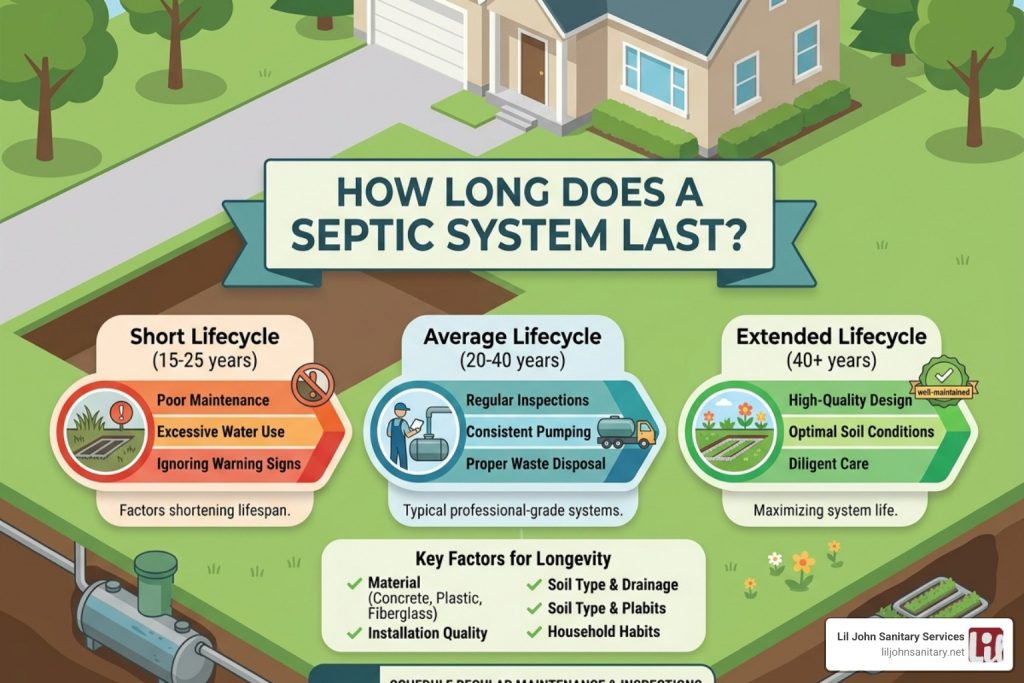
It’s easy to give averages, but every backyard in Whatcom County is different. Several variables can either stretch your system’s life to 50 years or cut it down to 10.
Maintenance Levels and Pumping Frequency
The single biggest factor is you. Pumping your tank every 3 to 5 years is the “oil change” of homeownership. If you ignore this, the sludge level rises until it has nowhere to go but out into your expensive leach field. According to experts at How Long Will A Septic System Last?, consistent pumping prevents the irreversible clogging of soil pores.
Household Size and Design Capacity
Septic systems are sized based on the number of bedrooms in a house, assuming two people per bedroom. If you have a system designed for a 3-bedroom home but have six people living there, you are “overloading” the system. This hydraulic overload pushes water through the tank too fast, not giving solids enough time to settle. This is a common issue we see in 2026 as multi-generational living becomes more frequent in our local communities.
How long does a septic system last in acidic soil?
In some parts of the Pacific Northwest, soil pH can be a silent enemy. Acidic soil can accelerate the erosion of concrete tanks. Bacteria in the tank produce hydrogen sulfide gas, which, when mixed with moisture, creates sulfuric acid. This acid eats away at the “ceiling” of your concrete tank. During our inspections, we look for “crumbly” concrete at the top of the tank—a sure sign that the soil and gas chemistry is winning the war. Protective coatings can help, but regular venting is key.
How long does a septic system last with high water usage?
Your drainfield can only “breathe” so much. If you do five loads of laundry on a Saturday, you are hitting the system with a “surge load.” This can saturate the soil, preventing oxygen from reaching the beneficial bacteria that treat the waste. Constant “leaky” toilets are even worse—they can add tens of thousands of gallons of unnecessary water to your system annually. For more on how usage impacts your pipes, see our septic system maintenance insights.
Signs Your System is Reaching the End of the Road
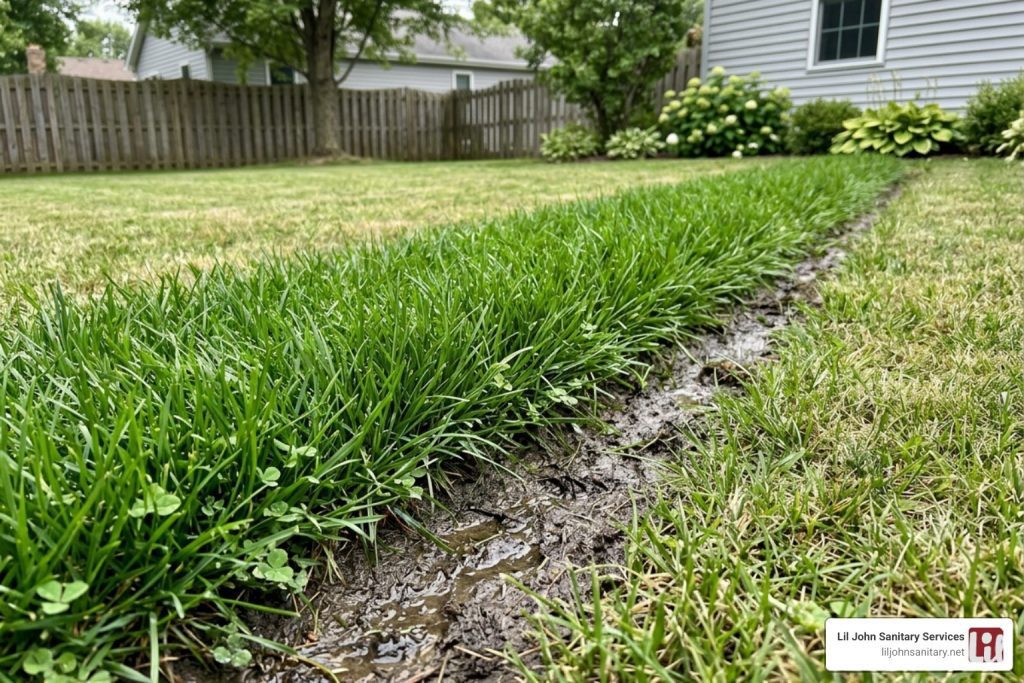
Your septic system usually won’t die silently. It will try to tell you something is wrong. If you notice any of the following in your yard in Lynden or Ferndale, it’s time to call us:
- The “Lush Green Strip”: If the grass over your drainfield is suddenly much greener and faster-growing than the rest of the yard, it means effluent is rising to the surface. Your grass is essentially being over-fertilized by raw sewage.
- Slow Drains and Gurgling: If your sinks take forever to drain or your toilet makes a “glug-glug” sound when you flush, the system is likely backed up.
- The “Septic Odor”: You shouldn’t smell your septic system. A persistent rotten-egg smell in the yard or near drains is a sign of a leak or a failing vent.
- Standing Water: If you see “mushy” spots or standing water over the tank or drainfield—especially when it hasn’t rained—your soil has likely hit its limit.
- Structural Crumbling: During a pump-out, if the technician notes that the baffles have fallen off or the concrete walls are thinning, the tank is nearing structural failure.
Extending Longevity: Maintenance vs. Neglect
The math of neglect is brutal. A standard pump-out every few years might cost a few hundred dollars. A new drainfield in 2026 can easily cost $20,000.
Excellent Maintenance (The 50-Year Goal)
To get half a century out of your system, you need to do more than just pump.
- The One-Third Rule: We recommend pumping when the solid waste (sludge and scum) exceeds one-third of the tank’s total depth.
- Lint Filters: Washing machines are a major source of synthetic lint that doesn’t break down. Installing a $30 filter on your machine’s discharge line can save your drainfield.
- Septic-Safe Cleaners: Avoid “anti-bacterial” everything. You want bacteria in your tank. Harsh chemicals like bleach and drain cleaners kill the “good bugs” that eat the waste.
- Protect the Field: Never drive a car, park a boat, or build a shed over your drainfield. Soil compaction is permanent and fatal to a leach field.
For a deep dive into these habits, refer to this Comprehensive Guide on Septic Longevity.
Frequently Asked Questions
How much does it cost to replace a septic system in 2026?
In the Whatcom and Skagit County areas, a full replacement typically ranges from $10,000 to $30,000. This includes the cost of the new tank, the excavation for a new drainfield, soil perc tests, and county permitting fees. If you have a “difficult” site that requires a mound system or an ATU, the cost can lean toward the higher end of that scale.
When should I repair versus replace my septic tank?
We generally suggest the 50% rule: if the cost of a repair (like a new pump and baffle replacement) exceeds 50% of the cost of a new tank, and your system is over 25 years old, replacement is usually the better investment. However, if the tank shell is structurally sound, replacing a broken baffle or a cracked pipe is a simple, cost-effective way to add another decade to the system.
Are steel septic tanks still safe to use?
In our professional opinion: No. Steel tanks from the mid-20th century are “ticking time bombs.” Beyond the risk of environmental contamination from leaks, the structural integrity of a 30-year-old steel tank is almost non-existent. We’ve seen lids that look solid but are paper-thin due to rust. If you have one, budget for a replacement immediately for the safety of your family and pets.
Conclusion
At the end of the day, how long does a septic system last is a question that you have a lot of power to answer. While you can’t change the soil you were born with or the material of a tank installed in 1990, you can control how you treat it today.
At Lil John Sanitary Services, we’ve spent 60 years helping our neighbors in Bellingham, Burlington, and throughout Whatcom and Skagit Counties keep their systems running smoothly. As a family-owned, licensed, and bonded team, we pride ourselves on being the experts you can trust when things get “messy.” Whether you need a routine OSS inspection for a home sale, an emergency pump-out, or just some advice on your aging system, we’re here to help.
Don’t wait for the “green patch” to appear in your yard. Proactive care is the only way to avoid the $30,000 surprise. Schedule your septic system maintenance today and let us help you get another 20 years out of your investment.